Real thermometer: Temperature
- 4.5
- Rating
- 500.00K
- Installs
- Free
- Price
 Analysis by App-foxy
I tried Real thermometer: Temperature with a simple question in mind: does a phone-based thermometer become genuinely useful after the first few curious checks, or is it mainly a novelty? My answer is mixed, but fairly clear. This free weather app has an appealingly direct idea, a clean purpose, and enough convenience to earn a place on some phones. It is especially interesting for people who want a quick Fahrenheit temperature reading without carrying a separate device. At the same time, it should not be treated like a professional instrument, and its long-term value depends heavily on how often you actually need that kind of glance.
The app comes from Weather Widgets & Weather Radar & Forecast, and its store identity is deliberately straightforward: a real thermometer for your phone. It is available to everyone, runs on Android starting with version 7.0, and the current release is 5.1.0. I like that the concept is easy to understand before installation. There is no complicated promise to decode; you open it because you want temperature information, particularly in Fahrenheit.
What the first week feels like
In the first week, I’d pay attention to whether the temperature check naturally attaches to a decision, rather than opening the app just to watch a number. Pairing it with a familiar cue—getting dressed, packing for a commute, or deciding when to take a walk—makes the trial more revealing and helps separate a useful habit from temporary curiosity.
You May Also Like

 Blood Strike: 2.5 Anniversary
Blood Strike’s Loadouts Turn Every Drop Into a Tactical Gamble
A close look at Blood Strike’s custom loadouts: how fast access to signature weapons reshapes its battle royale rhythm, rewards preparation, and narrows the gap between fights.

 Pandora - Music & Podcasts
Pandora’s Music Is Easy to Start, but Harder to Recover
Pandora’s strength is its low-effort path from a seed to a station. Its weak spot is how much confidence it asks you to place in connection, setup, and quiet recovery.

 8 Ball Pool
 Is Built on Rivalries, Rematches, and Routine
A close look at the rivalries, rematches, shared routines, and unanswered safety questions that turn a quick pool match into a persistent mobile community.

 Samsung Music
’s Quiet Strength Is Playing What You Already Own
Its reach comes less from spectacle than from dependable access to a personal library. That simplicity is both the app’s strongest retention engine and its ceiling.

 AccuWeather: Weather Radar
AccuWeather Review: A Quick, Clear Forecast for Everyday Decisions
For everyday plans, the best forecast is the one you can understand quickly. AccuWeather makes rain timing, radar, and local conditions easy to act on, with a few trade-offs.

 Hill Climb Racing
Why Hill Climb Racing Still Turns Crashes Into One More Run
A tiny car, a bumpy hill and one more upgrade: Hill Climb Racing keeps resurfacing because its simple chaos makes every near-miss feel personal.
More From Our News Desk



The immediate appeal is speed and simplicity
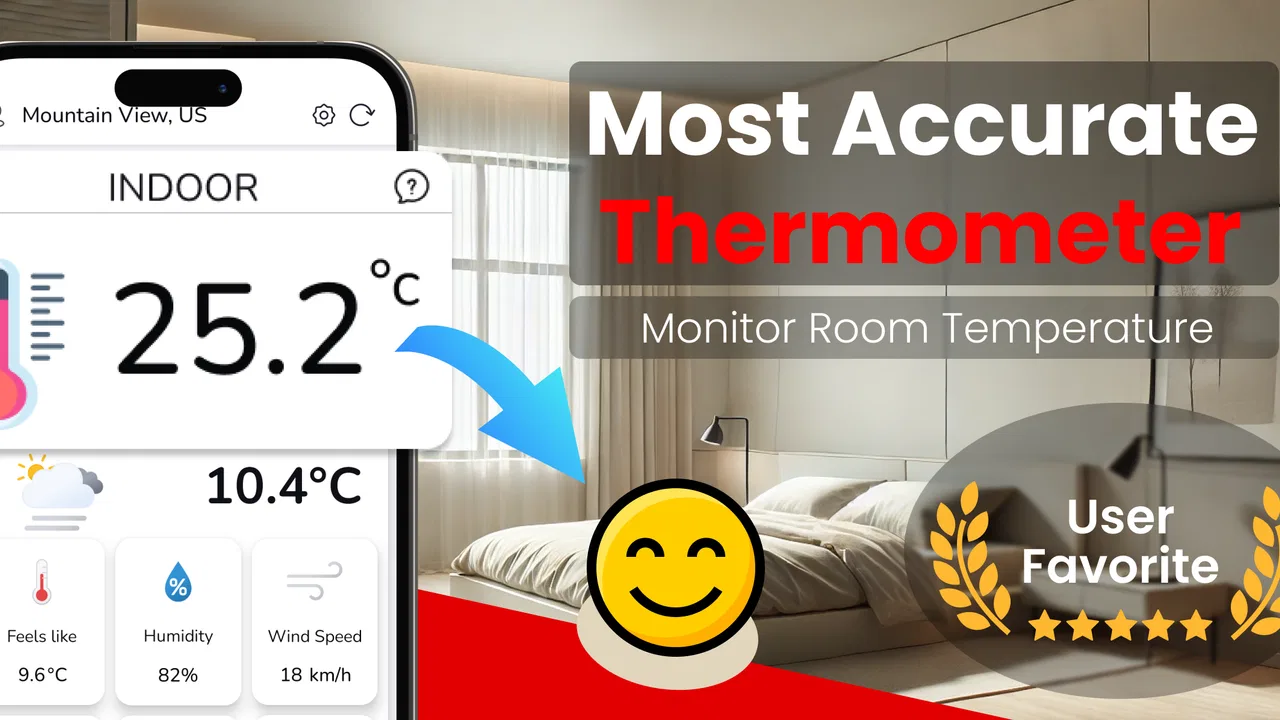
During the first week, the strongest part of the experience is the low effort. Weather apps often surround a temperature reading with forecasts, radar layers, alerts, hourly charts, and several panels competing for attention. This app feels more focused. If your main question is “How warm is it right now?” the narrow purpose can be refreshing.
I can see the appeal in a normal morning routine. Before leaving for work, school, or a walk, I check the temperature and decide whether a light jacket is enough. The same quick check is useful before opening a window, taking a child outside, or planning a short errand. In those moments, I do not necessarily want a complete forecast. I want a fast answer that helps me make a small decision.
The Fahrenheit focus also matters. People who naturally think in Fahrenheit do not have to mentally convert a Celsius figure every time they look at the screen. That sounds minor, but repeated friction is exactly what makes a utility app disappear from a routine. Here, the intended unit matches the habits of its target audience.
My first-week impression was therefore positive, though not because the app replaces a full weather service. It earns attention by being narrow. The best utility apps often succeed by answering one question quickly, and this one understands that principle better than many overloaded weather dashboards.
It is useful, but the word “thermometer” needs sensible expectations
The name can create a stronger expectation than a phone can realistically meet. A smartphone is not automatically the same thing as a dedicated outdoor thermometer. The result should be read as a convenient weather temperature reference, not as a laboratory measurement or a medical reading. I would never use it to check a fever, validate a food-storage temperature, or make a safety-critical decision.
That distinction is important because the app’s value comes from convenience rather than precision equipment. For everyday choices, a nearby weather temperature can be perfectly adequate. For checking an exact room, surface, body, or object temperature, a dedicated thermometer is the better tool. This is the first trade-off I would explain to a friend before recommending it.
The app has attracted a 4.7 average from around 3.3 thousand ratings, with more than 500 thousand installs. That level of interest suggests the basic idea connects with many people, but popularity does not change the practical boundary: a phone app can be convenient without being a replacement for specialized hardware.
Who is likely to enjoy it right away
I think the strongest audience is someone who wants a lightweight temperature check and prefers Fahrenheit. It also suits users who find traditional forecast apps visually busy or who do not want to navigate several screens just to see one current condition. Someone setting up a simple phone for a parent or relative may also appreciate the focused purpose, provided the person understands what the reading represents.
It is less suitable for a weather enthusiast who wants detailed radar movement, severe-weather tracking, long-range planning, or a deep hourly forecast. It is also the wrong choice for anyone expecting the phone to behave like an actual sensor probe. If you already own a reliable outdoor thermometer and need exact local readings, this app adds convenience but not necessarily capability.
What remains useful after the novelty fades
Once the novelty settles, I’d judge the app by whether it still saves a small step on days when the temperature could change what I wear or do. That makes its usefulness easier to assess than counting how often I open it: a quick check that prevents an uncomfortable choice can matter more than several casual visits.
The recurring value comes from repeated small decisions
After the first week, the question changes from “Is this interesting?” to “Do I still have a reason to open it?” For me, the answer depends on habits. Temperature checks are not usually exciting, but they are repeated often enough to become useful. The app can settle into a small daily routine: check before commuting, check before exercise, or check before deciding whether outdoor plans need changing.
That recurring value is practical rather than dramatic. It will not transform how I plan a trip, but it can remove a little uncertainty from ordinary moments. If I am choosing between a coat and a sweater, deciding whether to air out a room, or judging whether a short walk will be comfortable, a quick reading is enough. The app works best when I treat it as a decision aid, not as a source of entertainment.
One non-obvious advantage of a focused tool is that it can reduce the temptation to over-plan. A full weather application may invite me to browse forecasts I do not need. This one encourages a quick check and then lets me move on. For people who want less screen time around routine tasks, that narrow interaction can be a genuine benefit.
Where a normal weather app is still better
The usual weather alternatives have a broader role. A conventional weather app is better when I need to know whether rain is approaching, how conditions will change through the afternoon, or whether a forecasted temperature will make an outdoor event uncomfortable later. Radar and alerts matter when weather is changing quickly. A dedicated thermometer is better when the exact temperature of a room or object matters.
Real thermometer: Temperature sits between those options. It is more focused than a full forecast service, but less physically direct than hardware. That middle position is both its strength and its limitation. It can be the fastest route to a basic temperature check, yet it cannot cover every reason someone might look at weather information.
My practical advice is to decide what question you ask most often. If the question is “What is the temperature in Fahrenheit right now?” this app has a clear reason to stay installed. If the question is “Will my drive be safe tonight?” or “Will it rain during my event?” a broader weather service should remain your main tool.
Three useful habits that improve the experience
First, I would use it at consistent moments instead of opening it randomly. A morning check and an afternoon check create a useful personal routine, while repeated curiosity checks can make the app feel less valuable than it is. The goal is to connect the reading to a decision.
Second, I would compare the displayed temperature with the conditions immediately around me rather than assuming it represents every location nearby. A reading that is helpful for a general outdoor decision may not describe a shaded balcony, a sunny pavement, or an indoor room. This is an easy mistake with any weather-based temperature tool.
Third, I would keep a separate dedicated thermometer for situations where accuracy has consequences. That includes health checks, protecting temperature-sensitive items, or evaluating heating and cooling equipment. This division of responsibility lets the app remain useful without asking it to do a job it was not designed to do.
Maintenance, fatigue, and the cost of keeping it around
Keeping a focused utility around is worthwhile only if it continues to answer a question I actually ask, so I’d periodically reconsider whether it belongs in my routine. I’d also treat any optional purchase as a separate decision: first establish that the free app earns regular use, then consider spending only if an added option clearly improves that routine.
The maintenance burden is relatively light, but attention still has a cost
A small utility app earns long-term space when it remains easy to trust and easy to use. The maintenance burden here is not physical upkeep in the way a separate thermometer might need batteries or storage. Instead, it is the mental maintenance of remembering what the reading means and when it is appropriate to rely on it.
I would also keep an eye on updates and the way the app behaves over time, especially because weather utilities can become irritating if they interrupt a routine with unnecessary prompts or clutter. The current version is 5.1.0, and the app is free to install, which lowers the barrier to trying it. Optional in-app purchases range from $6.49 to $14.99 per item, so I would pay attention during setup and only spend money if an added option clearly improves my own workflow.
That pricing range does not automatically make the app poor value, but it does change how I judge it. The free experience needs to be useful on its own because the core idea is simple. I would not pay merely to turn a basic temperature glance into a recurring expense. A purchase makes more sense only for someone who uses the app frequently and finds the additional experience worth keeping.
What can cause fatigue over time
The biggest source of fatigue is repetition without a clear benefit. Once I know roughly what the temperature feels like outside, I may stop checking unless the reading affects a decision. That is not necessarily a flaw; it is the natural limit of a narrow utility. A thermometer does not need to be opened constantly to be useful, but it does need a place in a routine.
Another possible frustration is the gap between the app’s name and a user’s expectations. Someone who installs it hoping to measure the temperature of a drink, a wall, or their own body may feel disappointed. Avoiding that misunderstanding is essential. I would describe it to a friend as a convenient weather temperature app, not as an all-purpose sensor.
There is also the risk of replacing a more informative weather source when more context is needed. A single temperature figure cannot tell me whether strong wind will make the air feel colder, whether rain will arrive soon, or whether conditions will change before I return home. The app can support a weather habit, but it should not become the only weather information I consult in situations where timing and safety matter.
Privacy and practical setup questions worth considering
Before making it part of a daily routine, I would spend a moment checking the app’s setup screens and choosing only the options that serve my needs. Weather tools often become less pleasant when a user accepts every prompt without considering whether it is useful. A focused installation is usually easier to live with than one surrounded by distractions.
If you are installing it on an older Android phone, the minimum requirement of version 7.0 is reassuring because it covers a wide range of devices. Still, older hardware can make any app feel less immediate, so I would judge it by the actual opening speed and readability on the phone being used. The Everyone content rating also makes it suitable for a broad household audience, although younger users should still understand that a weather reading is not a medical measurement.
How it fits into a realistic month-to-month routine
Imagine a person who cycles to work several times a week. In the first days, they may open the app repeatedly just to see how the temperature changes. By the second month, the useful routine becomes more selective: check before leaving, compare the reading with the wind and sky, then choose clothing. On a warm day, the app may prevent overdressing; on a cold day, it may prompt an extra layer. The value is small but recurring.
Now imagine a person who mainly wants storm warnings and weekend planning. After the initial trial, this app will probably fade because a full weather service answers more of their questions. That is why I would not recommend it as a universal replacement. Its lasting place depends on whether a simple Fahrenheit temperature check is a repeated need rather than a one-time curiosity.
My long-term verdict
After the novelty fades, Real thermometer: Temperature remains worthwhile for a specific kind of user: someone who wants a quick, uncomplicated Fahrenheit temperature reference and understands its limits. Its strongest quality is focus. It does not need to become a complete weather center to be useful, because its best moments come when I need one basic fact before making an everyday choice.
I would recommend trying it if you regularly check outdoor temperature, dislike crowded weather interfaces, or want a simple tool for a family member. The free entry point makes that decision easy, and the broad device compatibility helps older Android users consider it. The app’s strong user response, including a 4.7 average and over 500 thousand installs, adds confidence that the central idea works for many people.
I would skip it if you need professional accuracy, indoor or object measurements, detailed forecasts, radar, or dependable safety alerts. In those cases, a dedicated thermometer or a full-featured weather service is the better investment. I would also avoid paying for extras until the free experience has proved that the app is part of a genuine habit rather than a short-lived experiment.
My final opinion is that this is a useful small tool, not a complete weather solution. It earns lasting space when it removes a repeated little inconvenience from your day. If you open it before leaving home and immediately make a better clothing or scheduling decision, it is doing its job. If you only open it because the idea of a phone thermometer sounds novel, the appeal will probably wear off. The lasting value is not in pretending a phone is specialized hardware; it is in making a basic weather check quick, familiar, and easy to act on.
FAQs for Real thermometer: Temperature
01How accurate is the Real Thermometer: Temperature app?
The Real Thermometer: Temperature app provides reasonably accurate readings by using your device's internal sensors. However, it's important to note that it might not be as precise as a professional thermometer. The app is designed for casual use, and various factors like device model and environment can affect accuracy.
02Does the Real Thermometer: Temperature app work on all devices?
The app is compatible with most modern Android and iOS devices. However, certain older models or those with limited sensor capabilities might not support all features. It’s recommended to check the app’s compatibility details on the download page before installing.
03Is the Real Thermometer: Temperature app free to use?
The app offers a free version with basic features. However, there might be in-app purchases or ads to unlock premium features and remove advertisements. Users can choose to upgrade if they prefer an ad-free experience or additional functionalities.
04Can the app be used to measure outdoor temperature?
The Real Thermometer: Temperature app primarily measures the temperature of your device’s surroundings, which may not accurately reflect outdoor conditions. For precise outdoor temperature readings, it’s advisable to use a dedicated weather app or device.
05What permissions does the Real Thermometer: Temperature app require?
The app typically requires access to your device's sensors and location to provide temperature readings. It may also request permissions for network access to update data. Users should review these permissions during installation to ensure they are comfortable with the access requested.
Pros
- Accurate temperature readings.
- User-friendly interface.
- Quick setup and calibration.
- Compatible with various devices.
- No intrusive ads.
Cons
- Requires internet for full features.
- Limited to ambient temperature.
- Occasional minor bugs.
- Battery consumption can be high.
- No offline historical data.

Real thermometer: Temperature
Gallery